
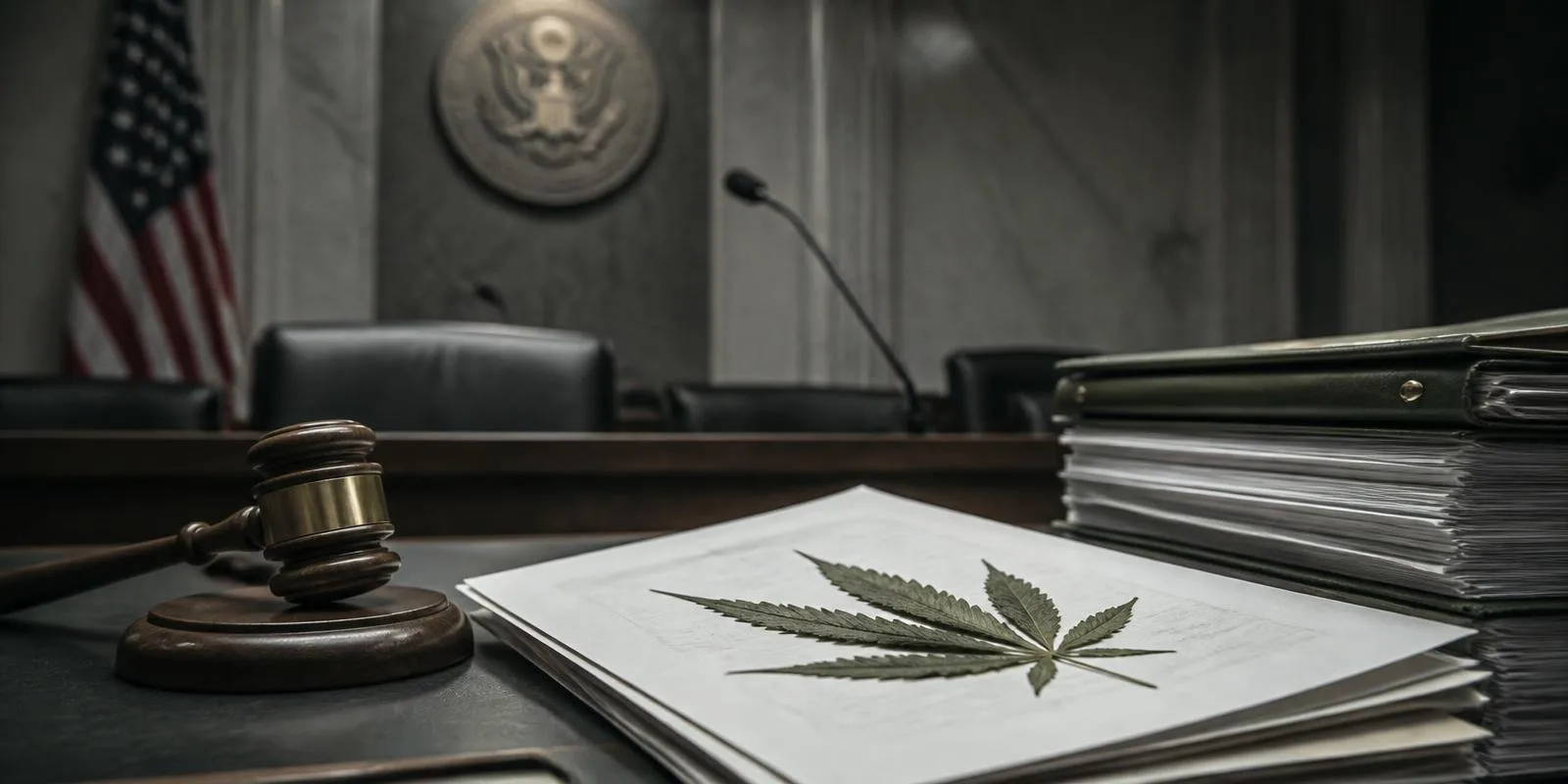
Is Marijuana Rescheduled Yet? Where the Federal Process Actually Stands
Federal marijuana rescheduling has been "about to happen" for years, which makes it easy to assume the question is either already settled or still purely theoretical.
Federal marijuana rescheduling has been "about to happen" for years, which makes it easy to assume the question is either already settled or still purely theoretical. Neither is true. As of this writing, marijuana's federal legal status has genuinely changed for some purposes and not others, a major administrative hearing on the bigger question has already concluded, and a decision from the judge who oversaw it hasn't been issued yet. Here's exactly where things stand, and why the answer to "is marijuana legal now" depends heavily on which marijuana you're asking about.
01The short answer
Marijuana is partially rescheduled. As of April 2026, FDA-approved drug products containing marijuana, and marijuana sold under a qualifying state medical marijuana license, moved from Schedule I to Schedule III of the Controlled Substances Act. Everything else — recreational marijuana in adult-use states, unlicensed marijuana, and marijuana outside the FDA-approved or state medical systems — remains Schedule I, the same federal category as heroin. A separate, broader process to decide whether marijuana as a whole should move to Schedule III is underway, with its central evidentiary hearing already finished and a ruling still pending.
02How the process got here
The current push traces back to October 2022, when President Biden directed federal agencies to review marijuana's Schedule I classification. The Department of Health and Human Services recommended in August 2023 that marijuana be moved to Schedule III, and the DEA published a formal notice of proposed rulemaking to that effect in May 2024, opening a public comment period that drew more than 42,000 responses along with numerous requests for a hearing.
That first hearing process didn't go smoothly. The DEA scheduled a hearing to begin in December 2024, but it stalled amid pre-hearing procedural disputes, was stayed in January 2025, and effectively stopped moving when the presiding administrative law judge retired from federal service in July 2025 without a replacement being named. For roughly a year, the rescheduling process was, practically speaking, frozen.
It restarted under the current administration. On December 18, 2025, President Trump issued Executive Order 14370, "Increasing Medical Marijuana and Cannabidiol Research," directing the Attorney General to complete the rulemaking process "in the most expeditious manner in accordance with Federal law." That order set up the two-track approach that defines where things stand today.
03What actually changed in April 2026
On April 23, 2026, Acting Attorney General Todd Blanche issued a final order — separate from the broader rulemaking process — immediately placing two specific categories of marijuana into Schedule III: FDA-approved drug products containing marijuana, and marijuana subject to a qualifying state-issued medical marijuana license. The legal basis Blanche invoked was somewhat unusual: authority to reschedule substances in order to carry out U.S. obligations under the Single Convention on Narcotic Drugs, an international drug treaty, rather than the standard rulemaking process the broader rescheduling question is still going through.
This order took effect April 28, 2026. It's worth being precise about what it does and doesn't cover. It does not affect recreational or adult-use marijuana, which remains Schedule I regardless of state legalization status. It does not affect synthetically derived THC, which stays Schedule I. It does not change the status of hemp as federally defined, and it doesn't touch previously scheduled cannabis-derived pharmaceutical products like Marinol and Syndros, which had already gone through their own separate scheduling history. In practical terms: if you're buying marijuana at a state-licensed medical dispensary, its federal classification just changed. If you're buying it at a recreational dispensary in a state where that's legal, federal law still treats it exactly as it did before — Schedule I, full stop.
The order is also facing active legal challenges. Petitioners have taken the matter to the U.S. Court of Appeals for the D.C. Circuit, arguing the order violates the "major questions doctrine" — a legal principle holding that decisions of vast economic and political significance require clear congressional authorization — and that it creates an equal protection problem by treating chemically identical products differently depending solely on state licensing or FDA approval status. That litigation is ongoing.
04The hearing's real fault line: who got to participate
Public and media access to the hearing was tightly limited — attendees were admitted in person on a first-come, first-served basis, with no audio or video recording permitted, which is part of why detailed public information about the proceedings has come primarily through participant and media accounts rather than a public recording.
Understanding who actually argued which side requires clearing up a point that's easy to get backwards: the DEA is not defending marijuana's current Schedule I status in this hearing — it's the formal proponent of moving marijuana to Schedule III, because DEA itself published the proposed rule back in May 2024, following a binding scientific recommendation from HHS. That makes DEA's role here procedurally straightforward, even though it represents a striking reversal of the agency's own institutional posture over the prior fifty-plus years, when DEA consistently defended marijuana's Schedule I placement. Government witnesses, including FDA officials, testified in support of rescheduling, arguing marijuana no longer meets the legal criteria for Schedule I.
The more consequential fight was over who else got a seat at the table. DEA selected seven outside "interested person" participants for the hearing — and by outside accounts, every one of them opposes rescheduling, including Smart Approaches to Marijuana, the Tennessee Bureau of Investigation, and the states of Nebraska, Idaho, Indiana, and Louisiana. Pro-rescheduling organizations, including NORML, had their requests to participate rejected on the grounds that they hadn't shown they were "adversely affected or aggrieved" by the proposed change — a standing requirement that, on its face, is easier for opponents of a policy change to satisfy than supporters of one. NORML formally appealed that rejection in June 2026; the presiding administrative law judge declined to revisit DEA's participant selections.
The upshot: the actual hearing record consists of the government (DEA and FDA) arguing for Schedule III against a slate of private parties uniformly arguing against it — without formal party status for the advocacy groups that support rescheduling but wanted it to go further (full descheduling, in NORML's case, rather than a move to Schedule III).
05Who's suing to stop the partial rescheduling, and why
The April 2026 order — the one that already moved FDA-approved and state-licensed medical marijuana to Schedule III — is being challenged in the U.S. Court of Appeals for the D.C. Circuit by three separate, now-consolidated petitions, all arguing the order should be vacated. One comes from Smart Approaches to Marijuana together with the National Drug and Alcohol Screening Association. A second comes from the attorneys general of Indiana and Nebraska (Louisiana initially joined but has since withdrawn). A third comes from a coalition that includes a pharmaceutical company, an industry-focused victims' advocacy group, an addiction recovery clinic, and two physicians.
Their arguments center on process as much as outcome: that the Attorney General exceeded his authority under the specific statutory provision he used (which is meant for narrower treaty-compliance purposes, not general rescheduling); that splitting marijuana into a "hybrid" schedule status Congress never authorized is unlawful; that skipping the normal notice-and-comment rulemaking process was improper; and, more broadly, that a decision of this economic and political significance requires clearer congressional authorization. Certain petitioners asked the court to pause the order while litigation proceeds; the government's response to that request was due July 2, 2026. As of this writing, that briefing has concluded, but a ruling on the stay request isn't reflected in public reporting yet.
06Where the hearing record actually landed
Since the hearing wrapped, both sides have filed final briefs, and the procedural cleanup has continued well into late August. The roughly 2,500-page hearing transcript required 294 corrections before being finalized and made public no later than August 26, 2026 — a sign the record itself has only just been settled, ahead of whatever recommendation follows.
DEA's August 17 post-hearing brief made its case for Schedule III directly, pointing to marijuana's existing medical use across the country — citing more than 30,000 practitioners treating over 6 million patients across 43 U.S. jurisdictions — and arguing "the vast majority of individuals who use marijuana do so in a manner that does not result in dangers to themselves or to their communities." The brief also worked to undercut the opposing witnesses directly, arguing that several lacked the qualifications to be treated as experts, and that others were asked to testify outside their actual area of expertise. Judge Julius has not yet issued a recommendation, and no public timeline exists for one.
07What actually changes if marijuana moves fully to Schedule III
If the broader rescheduling process concludes with marijuana moving to Schedule III across the board, the most immediate and widely discussed effect would be on federal taxation. Section 280E of the federal tax code currently bars businesses that traffic in Schedule I or Schedule II substances from deducting ordinary business expenses, which has driven effective federal tax rates for state-licensed cannabis businesses far above what comparable ordinary businesses pay. A move to Schedule III would end 280E's application to the cannabis industry, letting operators deduct standard expenses like any other business — a change the industry has anticipated for years and one that would have a direct, measurable financial effect independent of any of the public health questions the hearing is actually about.
Beyond taxation, Schedule III status would also ease some federal research restrictions, since Schedule I substances face the most stringent limitations on scientific study. It would not, on its own, make recreational marijuana federally legal, resolve the conflict between state legalization and federal law for adult-use markets, or change enforcement priorities for markets operating entirely outside the medical system — those questions would remain unresolved even after a favorable ruling, absent separate congressional action.
08What this means for addiction treatment specifically
Because this is fundamentally a business-and-research-access story more than a clinical one, it's worth being direct about what rescheduling would and wouldn't change for anyone dealing with cannabis use disorder or considering treatment. Schedule III status doesn't change the clinical reality that regular, heavy marijuana use can produce a diagnosable substance use disorder, involving tolerance, withdrawal symptoms, and functional impairment for a meaningful subset of regular users — that clinical picture doesn't shift based on which federal schedule the substance sits in. Treatment for cannabis use disorder, primarily therapy-based rather than medication-based since no FDA-approved medication currently exists specifically for it, would continue largely unchanged by a rescheduling decision alone.
Where rescheduling could matter more directly for the treatment field is research access. Schedule I status has historically made it substantially harder for researchers to study marijuana's effects, including its risks, because of the additional regulatory hurdles involved in studying Schedule I substances specifically. A move to Schedule III would ease some of those research restrictions, which could, over time, produce a better evidence base on cannabis use disorder itself, on marijuana's interactions with other substances, and on the actual prevalence and risk factors involved — questions that have been harder to answer definitively than they arguably should be, given how widely marijuana is already used. That's a slower, more indirect effect than the tax and business changes discussed above, but it's arguably the change most relevant to the addiction treatment field specifically, as opposed to the cannabis industry itself.
09What to actually watch for next
A few concrete things will determine how this resolves. First, Judge Julius's recommendation on the broader rescheduling question, which has no confirmed public timeline as of this writing but follows an eleven-day hearing that concluded in mid-July. Second, the outcome of the D.C. Circuit litigation challenging the April 2026 order that immediately rescheduled FDA-approved and state-licensed medical marijuana — a ruling against that order could complicate even the partial rescheduling already in effect. Third, whatever DEA Administrator action follows the judge's eventual recommendation, since an administrative law judge's recommendation in this kind of proceeding informs, but doesn't automatically bind, the final agency decision.
Frequently asked questions
Is marijuana legal federally now?
No, not broadly. As of April 2026, only marijuana in FDA-approved drug products and marijuana sold under a qualifying state medical marijuana license moved to Schedule III. Recreational and unlicensed marijuana remains Schedule I federally, regardless of state law.
When will we know if marijuana is fully rescheduled?
There's no confirmed public timeline. The central administrative hearing concluded July 15, 2026, and both sides have filed final briefs as of August 17, 2026, but the presiding judge's recommendation hadn't been issued as of this writing, and a recommendation would still need to be acted on by the DEA Administrator afterward.
Does this affect people buying marijuana in a legal recreational state?
Not directly. The April 2026 order specifically excludes recreational and adult-use marijuana from the immediate Schedule III change. Anyone buying marijuana outside the FDA-approved or state medical licensing system remains subject to marijuana's Schedule I status under federal law, regardless of state legalization.
Why did the DEA argue in favor of rescheduling if it spent 50+ years defending Schedule I?
Because DEA itself is the agency that proposed the rule change, back in May 2024, after receiving a binding scientific recommendation from HHS — so in this specific proceeding, DEA is procedurally the proponent of Schedule III, not a defender of the status quo. The more contested fight has been over who else got to formally participate: DEA selected seven outside parties for the hearing, and all of them oppose rescheduling, while pro-rescheduling groups like NORML had their participation requests denied.
What would change if marijuana is fully moved to Schedule III?
The most concrete and immediate effect would be ending the application of Section 280E of the federal tax code to state-licensed cannabis businesses, letting them deduct ordinary business expenses. It would also ease some federal research restrictions. It would not make recreational marijuana federally legal or resolve the broader state-versus-federal law conflict for adult-use markets.
---
Keep reading
More from Treatment Locators

How to Get Someone Into Rehab: What Families Can Do When a Loved One Needs Treatment
Watching someone you love struggle with addiction while they insist nothing is wrong is one of the more disorienting positions a family member can be in. You can see the problem clearly. They may not see it at all, or they see it and aren't ready to act on it.
September 15, 2026

How Much Does Inpatient Rehab Cost With Private Insurance?
The most rigorous available data on what insured people actually pay comes from a Peterson-KFF Health System Tracker analysis of 2023 commercial insurance claims.
September 14, 2026

Same-Day Rehab Admissions: How Immediate Addiction Treatment Access Works
Learn how same-day rehab admissions work, including detox, residential treatment, insurance, assessments, bed availability, and levels of care.
September 13, 2026