
Kratom, 7-OH, and the New DEA Ban: What Actually Changed, and What It Means for You
In the last week of August 2026, the legal status of a handful of chemicals most Americans had never heard of shifted overnight.
In the last week of August 2026, the legal status of a handful of chemicals most Americans had never heard of shifted overnight. Products that were sitting on gas station counters and convenience store shelves — legal to buy in most states one week — became federally illegal the next. If you or someone in your life uses kratom, or one of the newer "7-OH" products that have shown up alongside it in recent years, it's worth understanding exactly what changed, what didn't, and why regulators moved now.
This guide walks through the actual DEA action, the data behind it, what's still legally unsettled, and what it practically means if you're using these products or supporting someone who is.
01Kratom, 7-OH, and the new synthetic compounds — what's actually what
The terminology here gets confusing fast, and that confusion is part of why this situation has been hard to regulate. It's worth separating four distinct things.
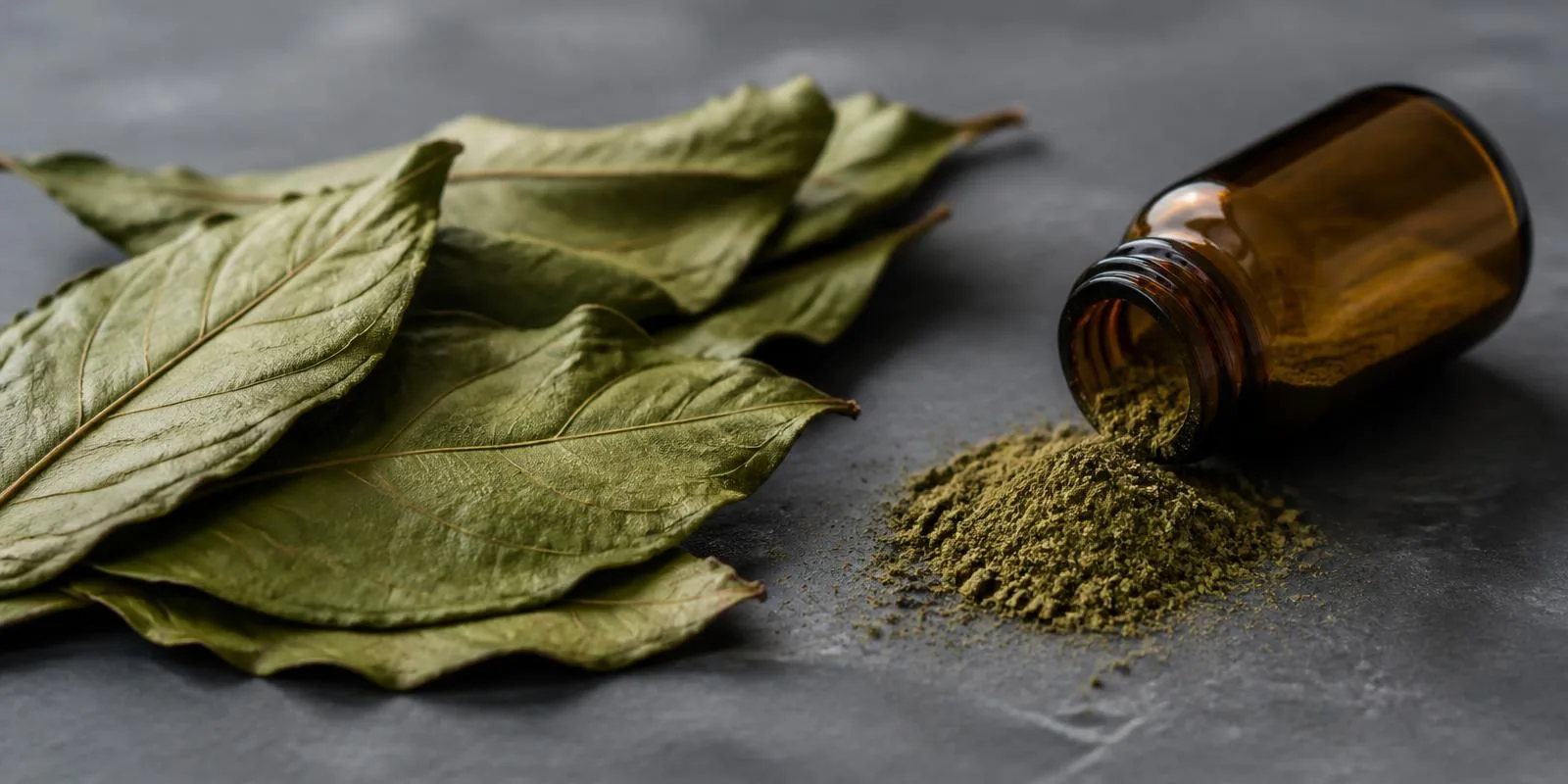
Kratom is the common name for Mitragyna speciosa, a tropical tree native to Southeast Asia. Its leaves have been used traditionally for pain relief, energy, and managing opioid withdrawal symptoms. In the United States, dried, ground, or brewed kratom leaf is sold as an herbal supplement — it's not FDA-approved for any medical use, but it's not federally scheduled as a controlled substance either, which means whole-leaf kratom remains federally legal, even after the action described in this article.
Mitragynine is kratom's main active compound. 7-hydroxymitragynine, almost always shortened to 7-OH, is a related compound that occurs naturally in kratom leaf, but only in very small amounts — typically well under one percent of the leaf's total content. 7-OH binds to opioid receptors more strongly than mitragynine does, which is part of why it's drawn regulatory attention on its own.
Over the past few years, that natural trace compound became the basis for an entirely different category of product: concentrated, synthetic 7-OH extracts, sold as tablets, gummies, "shots," and other fast-absorbing formats, often marketed with language like "botanical extract" or "mood booster." These aren't the same as chewing kratom leaf — a natural product used at low concentrations for centuries — but a manufactured, high-potency product built around one of its compounds.
The three substances the DEA just placed in Schedule I go a step further still. Mitragynine pseudoindoxyl (MGPI) is a chemically rearranged version of 7-OH — it doesn't occur in nature at all. MGM-15 is a synthetic derivative of 7-OH, and MGM-16 is a further modified version of MGPI. All three are lab-made compounds that happen to be chemically related to a plant, rather than the plant itself.
That distinction is the entire legal story here: the DEA's action does not touch natural kratom leaf. It targets synthetic compounds that were increasingly being sold alongside kratom and 7-OH products, sometimes without customers realizing the product they were buying had shifted from a botanical extract to a manufactured chemical.
02What the DEA actually did, and when
On August 25, 2026, the DEA issued a temporary order placing mitragynine pseudoindoxyl, MGM-15, and MGM-16 into Schedule I of the Controlled Substances Act — the same legal category as heroin and LSD, reserved for substances the DEA considers to have no accepted medical use and a high potential for abuse. The order took effect the following day, August 26, 2026.
This wasn't a snap decision. The DEA had notified the Department of Health and Human Services' Assistant Secretary for Health of its intent to schedule these substances back in December 2025; HHS raised no objection in a January 2026 response, and the DEA published formal notice of its intent on July 1, 2026, opening a 30-day public comment period before finalizing the order. Temporary scheduling under this legal authority lasts two years and can be extended for a third year while the DEA pursues a permanent scheduling decision through the normal rulemaking process.
Practically, this means manufacturing, distributing, importing, exporting, or possessing these three specific compounds is now a federal crime, carrying the same administrative, civil, and criminal penalties as any other Schedule I substance. It does not, on its own, make kratom illegal, and — importantly — it does not yet make 7-OH itself illegal either. That's a separate, still-unresolved piece of this story, covered below.
03Why now: the data behind the decision
Regulatory action like this doesn't happen in a vacuum, and in this case, the evidence trail is unusually well documented. The DEA's own order cited a Centers for Disease Control and Prevention Morbidity and Mortality Weekly Report published in March 2026, which analyzed a decade of kratom-related calls to U.S. poison control centers through the National Poison Data System.
The numbers are stark. Poison centers logged 258 kratom-related exposure reports in 2015. By 2025, that number had reached 3,434 — an increase of roughly 1,200 percent — with the sharpest jump occurring between 2024 and 2025, right around when synthetic 7-OH products began proliferating. Over the full 11-year study period, poison centers received 14,449 kratom-related reports in total. Hospitalizations tied to kratom climbed from 83 in 2015 to 1,087 in 2025, and the study identified 233 kratom-associated deaths over the period, 184 of them (about 79 percent) involving kratom combined with other substances rather than kratom alone.
The DEA's scheduling order specifically listed the health risks associated with mitragynine pseudoindoxyl, MGM-15, and MGM-16: cardiotoxicity, liver and kidney toxicity, respiratory depression, neurological effects, and physical dependence with withdrawal on discontinuation — the same broad category of risks associated with other opioid-class substances, which is precisely the DEA's rationale for treating these compounds as opioids under the law rather than as a botanical supplement.
It's worth being precise about what this data does and doesn't show. The MMWR study tracked poison center reports broadly, without distinguishing in every case whether a given report involved traditional kratom leaf, synthetic 7-OH, or one of the newer lab-made derivatives — the surge in reports coincides with, but isn't purely attributable to, any single one of these product categories. That nuance is part of why regulators have moved in stages: first targeting the furthest-from-nature synthetic compounds, while treatment of natural leaf kratom and 7-OH itself remains a live, separate debate.
04What's still unresolved: 7-OH itself, and Congress
The compound at the center of all this — 7-OH — has not yet been federally scheduled. The DEA issued a separate notice proposing to place 7-OH itself in Schedule I, but that proposal includes a threshold: it would not apply to naturally occurring 7-OH below a specified concentration in botanical kratom products, meaning traditional kratom leaf would remain exempt even if the 7-OH proposal is finalized. Public comment on that proposal generated an unusually large response — by some accounts, more input than the DEA received in 2016 the last time it attempted to schedule kratom's compounds and ultimately withdrew the proposal after public backlash. The comment period on the 7-OH proposal was extended and remains open through September 10, 2026, which means concentrated 7-OH products, distinct from the three compounds banned in August, remain federally legal for now.
Congress has its own version of this debate underway. Representative Gus Bilirakis introduced the END 7-OH Act (H.R. 8000) in March 2026, which would permanently schedule synthetic 7-OH through legislation rather than DEA rulemaking, while explicitly carving out an exception for 7-OH that occurs naturally within kratom leaf. Whether that bill advances, and how it interacts with whatever the DEA ultimately decides on its own 7-OH proposal, is still an open question as of this writing.
05A patchwork that's moving faster than federal law
While federal regulators have worked through this multi-step process, state legislatures have not waited. Alabama, Arkansas, Indiana, Vermont, and Wisconsin banned kratom outright years ago. That list has grown substantially more recently: Louisiana banned sales in August 2025, and Kansas classified both kratom and 7-OH as Schedule I substances effective July 1, 2026. In August 2026 alone, North Dakota's governor declared a public health emergency and banned kratom statewide, and Massachusetts issued a temporary emergency order placing all forms of kratom into the state's Schedule I — both actions arriving in the same weeks as the federal action on synthetic derivatives.
The picture isn't uniformly moving toward prohibition, though. Rhode Island had banned kratom outright, then reversed course: a law passed in 2025 shifted the state to a regulated-sale model for adults 21 and older, taking effect in April 2026, alongside new safety requirements. Some states, and an industry trade group, are pushing a different model entirely — "Kratom Consumer Protection Act" legislation that would regulate labeling, purity, and age restrictions for natural kratom while separately restricting or banning synthetic derivatives like 7-OH.
The practical upshot: kratom and 7-OH's legal status genuinely depends on which state you're in, current as of this writing, and it is changing quickly enough that a state-by-state list is likely to be at least partly outdated within a matter of months. Checking current state and even local law directly is the only reliable way to know where things stand in a specific location.
06Why this has been so hard to regulate
This isn't the DEA's first attempt to act on kratom's chemistry, and understanding what happened last time helps explain why regulators moved carefully this time around. In 2016, the DEA announced an intent to place kratom's two primary compounds — mitragynine and 7-OH — into Schedule I outright, treating the whole plant essentially the same way it's now treating three synthetic derivatives. That proposal triggered an enormous public backlash: patient advocates, kratom vendors, and members of Congress argued the DEA was moving to ban a substance many people were using, successfully by their own account, to manage chronic pain or step down from opioid painkillers, without adequate scientific review. The DEA withdrew the proposal later that year.
That episode shaped the approach regulators have taken since. Rather than attempting a single sweeping ban on kratom itself, the current strategy separates the plant from its synthetic offshoots, moves on the compounds with the clearest safety data first, and leaves the more contested question — 7-OH's own status — to a longer public process. The DEA's own materials noted that the 2026 comment period on scheduling 7-OH drew more public input than the entire 2016 kratom proceeding, an indication that the underlying disagreement between patient-access advocates and public-health regulators hasn't gone away; it's just being fought over narrower and narrower chemical distinctions.
The kratom industry itself isn't unified on this either, which adds another layer to the policy fight. Companies that sell plain-leaf kratom products have in some cases drawn a hard line against the newer synthetic 7-OH concentrates, arguing those products represent a fundamentally different — and more dangerous — category that shouldn't be defended alongside traditional leaf. The American Kratom Association, an industry trade group, has pushed state legislatures toward "Kratom Consumer Protection Act" laws: a regulatory middle path that would mandate labeling, purity testing, and age restrictions for natural kratom while supporting separate restrictions on synthetic derivatives like 7-OH. Whether that middle path holds, or whether momentum continues toward the kind of outright bans several states have enacted in 2025 and 2026, is likely to keep playing out state by state for the foreseeable future.
07What this means if you or someone you love is using kratom or 7-OH
If someone in your life uses kratom or 7-OH regularly, a few things are worth understanding clearly, separate from the legal questions above.
Regular use can create real physical dependence. Because these compounds act on opioid receptors, someone who uses kratom or 7-OH consistently, especially at higher doses or in concentrated synthetic forms, can develop tolerance and withdrawal symptoms similar in category to other opioids — irritability, muscle aches, insomnia, sweating, and cravings are commonly reported. This is a medical reality independent of legal status: a product being sold openly at a gas station has never meant it carries no risk of dependence.
Combining kratom or 7-OH with other substances substantially raises the danger. The CDC's own data found that the large majority of kratom-associated deaths involved more than one substance — alcohol, opioids, and antidepressants were among the most commonly co-reported substances in poison center data. If you or someone you know is using kratom or 7-OH alongside alcohol, prescription medications, or other drugs, that combination carries meaningfully more risk than either substance used alone.
If you're considering stopping, a medical provider or addiction treatment professional can help make that process safer and more manageable than stopping abruptly on your own, particularly for anyone using concentrated 7-OH products or using kratom multiple times daily. This isn't a situation where more willpower is the missing ingredient — physical dependence responds to structured medical support, not just intention.
None of this requires panic if you or someone you know uses kratom occasionally and at low doses, consistent with how it's traditionally been used. But given how quickly the market has shifted from whole leaf toward much more concentrated synthetic products, many regular users may not fully realize what, specifically, is in the product they're using, or how its potency compares to what they started with months or years ago.
08Where this fits in the bigger picture
This DEA action arrives at a moment when several currents in addiction policy are running at once: fentanyl-driven overdose deaths have been declining for several years running, treatment access remains uneven across the country, and a market for less-regulated substances — kratom and 7-OH prominent among them — has grown partly by positioning itself as an alternative or off-ramp from prescription opioids and illicit fentanyl. The regulatory response to synthetic 7-OH derivatives is, in part, an acknowledgment that a substance marketed as a natural alternative to opioids can still carry real opioid-like risk once it's concentrated and reformulated for rapid absorption.
Frequently asked questions
Is kratom illegal now?
No. The DEA's August 2026 action did not schedule kratom itself. It scheduled three specific synthetic compounds — mitragynine pseudoindoxyl, MGM-15, and MGM-16 — that are related to kratom's chemistry but are lab-made and not the same as the plant. Whole-leaf kratom remains federally legal, though its legal status varies significantly by state.
Is 7-OH illegal?
Not yet, at the federal level. The DEA has proposed scheduling 7-OH separately, with an exemption for the small amounts naturally present in botanical kratom, but that proposal is still in a public comment period, extended through September 10, 2026, and has not been finalized. Some states have already scheduled 7-OH under state law independent of federal action.
What's the difference between 7-OH and the newly banned compounds?
7-OH occurs naturally in kratom leaf in small amounts. Mitragynine pseudoindoxyl, MGM-15, and MGM-16 are synthetic compounds derived from 7-OH through chemical processing — they don't occur naturally and are typically found in concentrated products rather than natural kratom leaf.
Why did the DEA act on the synthetic compounds first, rather than 7-OH itself?
The DEA's own materials point to public safety data — a documented surge in poison center reports, hospitalizations, and deaths — as the basis for treating these specific compounds as an imminent hazard justifying emergency scheduling authority. 7-OH's broader presence in traditional botanical products, and the pushback the DEA received the last time it attempted to regulate kratom's compounds in 2016, appear to be part of why that proposal is moving through a longer public comment process rather than emergency action.
If I use kratom or 7-OH and want to stop, where should I start?
A primary care provider, addiction medicine specialist, or licensed treatment program is a reasonable first call, particularly if use has been frequent, at high doses, or has involved concentrated synthetic products rather than traditional leaf. Physical dependence on opioid-receptor-active substances is a medical condition that responds to structured support, and withdrawal can be more safely managed with medical involvement than attempted alone.
---
Keep reading
More from Treatment Locators

How to Get Someone Into Rehab: What Families Can Do When a Loved One Needs Treatment
Watching someone you love struggle with addiction while they insist nothing is wrong is one of the more disorienting positions a family member can be in. You can see the problem clearly. They may not see it at all, or they see it and aren't ready to act on it.
September 15, 2026

How Much Does Inpatient Rehab Cost With Private Insurance?
The most rigorous available data on what insured people actually pay comes from a Peterson-KFF Health System Tracker analysis of 2023 commercial insurance claims.
September 14, 2026

Same-Day Rehab Admissions: How Immediate Addiction Treatment Access Works
Learn how same-day rehab admissions work, including detox, residential treatment, insurance, assessments, bed availability, and levels of care.
September 13, 2026