
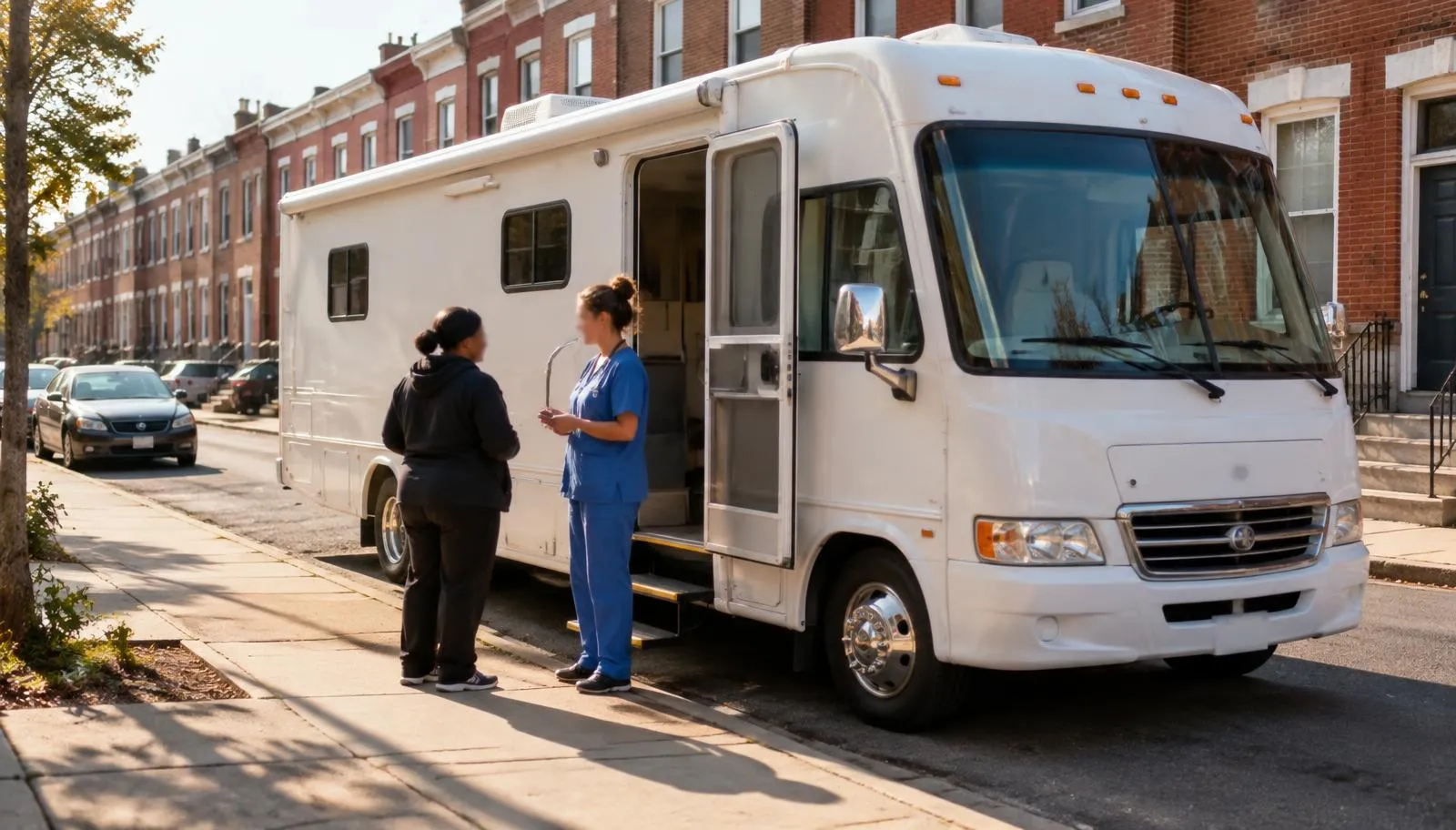
Philadelphia Launches First Licensed Mobile Opioid Treatment Program
Merakey's new licensed mobile methadone unit brings same-day medication, counseling and outpatient handoffs to Kensington, after a soft launch that started more than 300 people on treatment.
An RV parked in Kensington doesn't look like a turning point in how Pennsylvania delivers addiction treatment. But that's essentially what happened this week, when state and city officials cut the ribbon on the Merakey Mobile Methadone Unit — the first licensed mobile narcotic treatment program in Philadelphia, and part of the first wave of mobile treatment licenses the Commonwealth has ever issued.
The unit is operated by Merakey, one of Philadelphia's largest substance use disorder treatment providers, under a license from the Pennsylvania Department of Drug and Alcohol Programs (DDAP). It's a partnership with the city's Department of Behavioral Health and Intellectual disAbility Services (DBHIDS), and it's designed to do something brick-and-mortar clinics structurally can't: show up in the neighborhoods where the need is worst, rather than asking people to find their way to a fixed address.
01Why a Mobile Unit, and Why Methadone Specifically
Methadone is one of three FDA-approved medications for opioid use disorder, alongside buprenorphine and naltrexone, and it's the one with the least flexibility built in. Unlike buprenorphine, which can often be prescribed for take-home use once someone is stabilized, methadone dispensed through a treatment program typically requires showing up in person, frequently daily, especially early in treatment. That daily requirement is exactly where transportation, work schedules, housing instability, and general logistics turn a workable treatment plan into an impossible one for a lot of people. A mobile unit doesn't just add convenience to that equation — it removes the single biggest reason people who want treatment don't get it.
DDAP Secretary Dr. Latika Davis-Jones put it plainly at the launch: "This mobile unit is literally going to meet Philadelphians where they are — that is a huge incentive for individuals to continue with their treatment. It's also a prime example of how the Shapiro Administration is knocking down barriers to treatment, like transportation and the stigma often associated with seeking help."
02What's Actually on the Unit
The mobile unit isn't limited to dispensing medication. According to DDAP, services include same-day access to SUD medication, ongoing medication maintenance, wound care, counseling, peer support, and what the department calls "warm handoffs" — active, staffed transitions into longer-term outpatient treatment once someone stabilizes, rather than a one-time dose and a pamphlet. Staffing includes physicians, nurses, counselors, certified peer specialists, and recovery specialists, which is a meaningfully fuller clinical team than "mobile methadone" might suggest on its own.
The stated goal isn't to replace traditional treatment centers — it's to function as a low-barrier entry point that connects people to those centers once they're stable enough to use them. That distinction matters. A mobile unit that only dispenses medication with no plan for what comes next just delays the same access problem; this one is explicitly built around the handoff.
03The Soft Launch Already Has Real Numbers Behind It
Before this week's official launch, the unit ran a soft-launch phase operating out of the Kensington Wellness Support Center specifically. In that period alone, more than 300 people started methadone treatment through the unit, and 96 were stabilized to the point of being connected into outpatient programs for ongoing care. Those aren't projections — they're what happened before the ribbon was even cut, which is a genuinely useful thing to know if you're trying to judge whether this kind of program actually works or just sounds good in a press release.
Merakey CEO Joe Martz framed the rationale behind the model directly: "For many individuals struggling with opioid use disorder, accessing traditional treatment can be challenging. Transportation limitations, housing instability, medical needs, and other barriers can prevent people from receiving lifesaving care. The mobile unit gives us the flexibility to respond to the changing needs of our city by mobilizing services where they are needed most."
04Why Kensington, Specifically
The unit's initial focus on Kensington isn't incidental. The neighborhood's 19134 zip code recorded more than 1,600 overdose deaths between 2015 and 2024 — over double the total of any other zip code in Philadelphia — and it remains the epicenter of the city's opioid crisis by a wide margin, even as the city's citywide numbers have moved in a genuinely encouraging direction. Philadelphia's overdose deaths fell to roughly 1,045 in 2024, a 20% drop from 2023 and the second consecutive year of decline after peaking above 1,300 in 2022; preliminary state data suggests 2025 will land even lower, potentially the city's first year under 1,000 overdose deaths since 2016.
That progress hasn't been distributed evenly, and it's worth saying so directly rather than glossing over it. Research from Pew's Philadelphia polling on the opioid crisis has found the recent decline has been driven primarily by falling rates among white residents, while overdose rates among Black residents have continued to climb over the same period. A mobile unit that can be deployed specifically into the neighborhoods carrying the heaviest ongoing burden — rather than waiting for people to travel to wherever a fixed clinic happens to be located — is at least structurally positioned to address that gap, even if it's too early to say whether it will.
05Part of a Larger Pattern in Pennsylvania, Not a One-Off
The Merakey unit isn't the only mobile treatment license DDAP has issued. The department has also licensed Gaudenzia's "Driving Recovery for PA," aimed at rural counties, and Tadiso's "Treatment on Wheels," serving Allegheny County — meaning this launch is really the Philadelphia piece of a broader, statewide bet that mobile, licensed treatment can reach people fixed clinics structurally miss, in both dense urban neighborhoods and spread-out rural counties alike.
It also sits alongside a stack of other Shapiro administration investments in this space: $8.6 million distributed to four county drug and alcohol offices for SUD crisis stabilization across seven counties, $5 million in the 2026-27 state budget earmarked for walk-in behavioral health crisis centers, warm handoff programs now running in nearly 170 Pennsylvania hospitals that have connected almost 68,000 people into treatment directly after an overdose, and more than 6,200 referrals made through the state's Get Help Now helpline in 2025 alone.
06Finding Addiction Rehab or Detox in Pennsylvania Right Now
If you're not in Kensington or don't need a mobile methadone unit specifically, Pennsylvania's broader treatment system is larger than this one launch. The state currently licenses nearly 800 brick-and-mortar SUD treatment facilities offering inpatient rehab, outpatient care, and detox programs across Pennsylvania, along with more than 450 licensed recovery houses.
The most direct starting point for finding addiction rehab in PA, whether you're looking for opioid rehab specifically or another type of substance use treatment, is the state's own toll-free Get Help Now helpline, 1-800-662-HELP (4357), which connects callers to local treatment resources statewide, including detox programs in Pennsylvania for anyone who needs medically supervised withdrawal management before starting ongoing treatment. Treatment Atlas, a free tool available online or as a smartphone app, lets anyone search confidentially for treatment matching their specific needs and location. County-level Single County Authorities can also help directly with treatment funding, assessing what level of care might fit a given situation, and making referrals — a genuinely underused resource for anyone who's found the search process confusing.
Frequently Asked Questions
Who actually runs the mobile methadone unit — the state or Merakey?
Merakey, a Philadelphia-based substance use disorder treatment provider, operates the unit under a license issued by the Pennsylvania Department of Drug and Alcohol Programs, in partnership with the City of Philadelphia's Department of Behavioral Health and Intellectual disAbility Services.
What does the unit actually offer beyond methadone?
Same-day medication access, ongoing medication maintenance, wound care, counseling, peer support, and structured handoffs into longer-term outpatient treatment once someone stabilizes.
Is this the only mobile addiction treatment unit in Pennsylvania?
No. DDAP has also licensed Gaudenzia's "Driving Recovery for PA" for rural counties and Tadiso's "Treatment on Wheels" for Allegheny County, as part of the state's first-ever licensing of mobile narcotic treatment programs.
Did the program show results before this official launch?
Yes. During a soft-launch phase based at Kensington's Wellness Support Center, more than 300 people began methadone treatment through the unit, and 96 were stabilized and connected to outpatient programs for continued care.
How can I find addiction treatment or detox somewhere else in Pennsylvania?
Call the state's Get Help Now helpline at 1-800-662-HELP (4357), use the free Treatment Atlas locator tool, or contact your county's Single County Authority directly for help finding addiction rehab, opioid rehab, or a detox program in PA and connecting to treatment funding and referrals.
Why does a mobile unit matter specifically for methadone, compared to other medications?
Methadone dispensed through a treatment program typically requires frequent, often daily, in-person visits, especially early in treatment, unlike buprenorphine, which can be prescribed for take-home use once someone is stabilized. That makes transportation and logistics a bigger barrier for methadone specifically, which is part of why a mobile delivery model was prioritized here.
Keep reading
More from Treatment Locators
Alcohol Detox: What Happens, Timeline, and Levels of Care
What alcohol detox actually involves, why it's medically monitored, and how long withdrawal typically lasts, based on NIAAA and ASAM guidance
October 2, 2026

Inpatient vs Outpatient Rehab: Differences in Treatment, Schedule, Cost and Levels of Care
Real data on inpatient vs outpatient rehab: how they differ in structure, cost, and outcomes, and what the actual research shows about which setting helps whom.
September 25, 2026
Snohomish County Seeks Provider for Mobile Opioid Treatment
Opioid settlement money is funding the next contract for a mobile treatment unit serving rural Snohomish County, with applications due September 30 and service starting January 1, 2027.
September 22, 2026