

Snohomish County Seeks Provider for Mobile Opioid Treatment
Opioid settlement money is funding the next contract for a mobile treatment unit serving rural Snohomish County, with applications due September 30 and service starting January 1, 2027.
Snohomish County has opened a formal procurement process to continue and potentially expand mobile medication for opioid use disorder (MOUD) services in rural parts of the county, using opioid settlement funds. The Request for Qualifications, posted by the county's Human Services Department, sets a January 1, 2027 start date for the next contract period and gives eligible applicants until September 30 to apply.
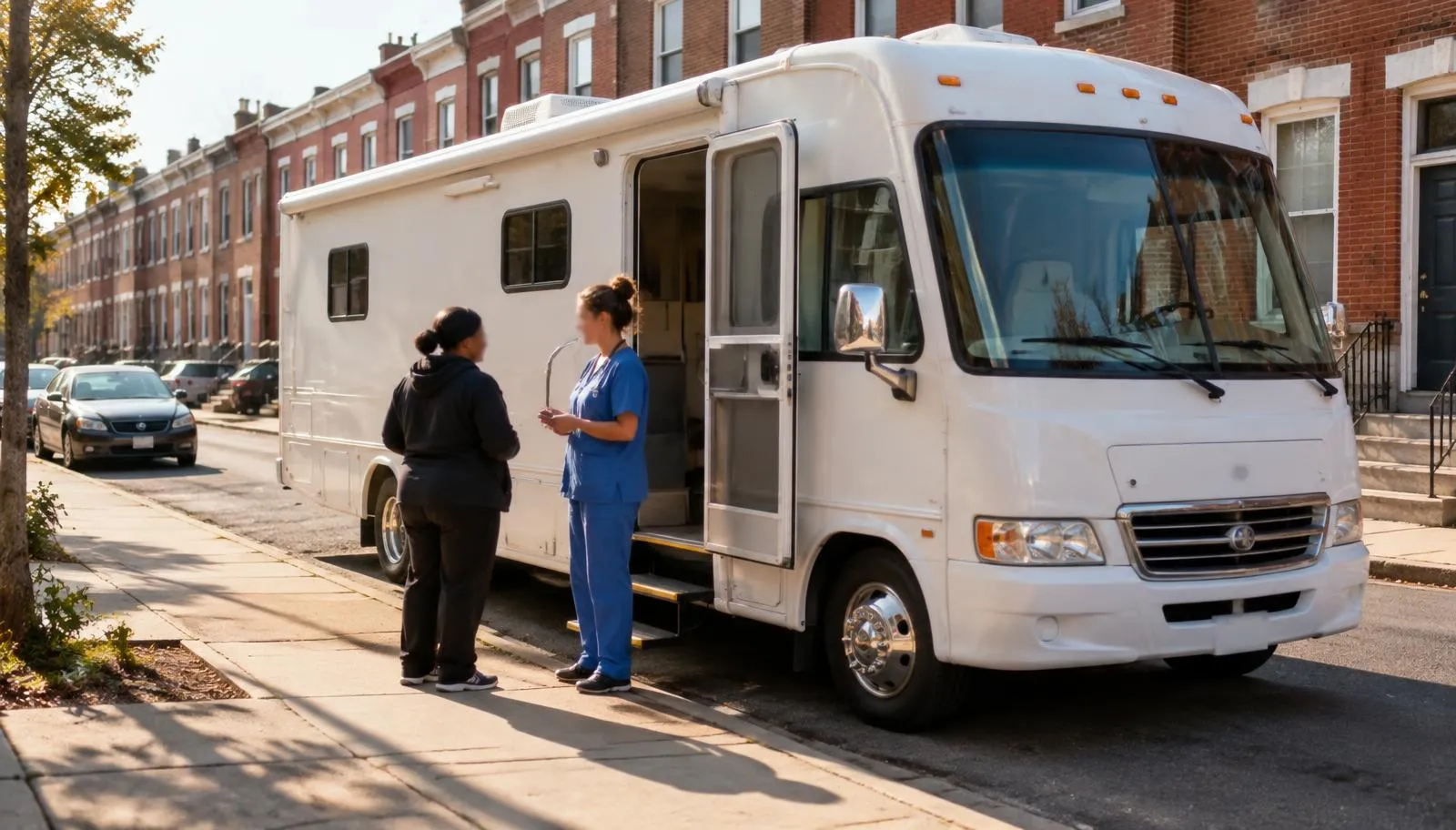
This isn't the start of mobile addiction treatment in Snohomish County — the county already launched a mobile MOUD clinic in July 2025. What this RFQ represents is the next contracting cycle for that program: an opportunity for the county to continue the existing service, expand its reach, or bring in a new operator, depending on who applies and how the review process unfolds.
01What the RFQ Actually Asks For
According to the RFQ document, Snohomish County is seeking an entity to operate a "fully equipped mobile treatment unit" delivering MOUD, counseling, primary care, peer support, telehealth, and other support services to underserved rural communities. The document specifically notes the project's scope "may expand to include facilities that provide long-term care and respite services," suggesting the county is leaving room to grow the program beyond its current footprint rather than simply renewing it as-is.
Eligibility is notably narrow: only entities already certified by the Washington State Division of Behavioral Health and Recovery to provide MOUD, and already operating within Snohomish County, may apply. That eligibility restriction is worth noting on its own — it suggests this procurement is structured as a continuation of the county's existing local provider relationships rather than an open invitation for an outside operator to enter the county for the first time.
Funding comes from the One Washington Memorandum of Understanding, the state's mechanism for distributing opioid settlement dollars — the same funding source, from lawsuits against opioid distributors and manufacturers, that paid for the county's original 2025 mobile clinic launch.
02How Applications Are Being Evaluated
The RFQ lays out a 120-point scoring structure, weighted heavily toward clinical and operational substance over general qualifications. Organizational capacity and experience operating a MOUD program (methadone, buprenorphine/Suboxone, and naltrexone/Vivitrol) accounts for 20 points. Treatment protocols — specifically how an applicant handles methadone dosing, urinalysis monitoring, and evidence-based practice — carry another 20 points. A separate 15-point category focuses specifically on serving priority populations, including pregnant individuals, people experiencing homelessness, and veterans, along with trauma-informed care practices. Community outreach, implementation timeline, and fiscal capacity working with Medicaid and government contracts round out the remaining points.
Applicants must also demonstrate a realistic plan to have the mobile unit operational by the January 1, 2027 start date, including staff hiring and training timelines.
03Timeline
- September 14, 2026 — deadline for written questions about the RFQ
- September 30, 2026 — applications due to the county by 5:00 p.m.
- October 28, 2026 — tentative notification to the selected applicant
- December 31, 2026 — tentative date for an executed contract
- January 1, 2027 — start of the new contract period
04What MOUD Actually Is, and Why the State Is Pushing It So Hard
For anyone unfamiliar with the term, medication for opioid use disorder (MOUD) refers to FDA-approved medications — methadone, buprenorphine (often known by the brand name Suboxone), and naltrexone (Vivitrol) — used to treat opioid use disorder directly, reducing cravings and withdrawal rather than simply managing them through counseling alone. According to Washington's Health Care Authority, these medications can reduce mortality from opioid use disorder by more than half, which is part of why the state has spent the last several years actively working to expand access rather than treating MOUD as one option among many.
That expansion effort accelerated further in 2023, when the federal Mainstreaming Addiction Treatment (MAT) Act eliminated the special "X-Waiver" that previously required extra training and registration before a provider could prescribe buprenorphine — a real regulatory barrier that had limited how many doctors were willing to offer it. Washington has since built out additional infrastructure specifically to close the access gap that barrier left behind, including a statewide Hub and Spoke model connecting smaller community providers to a central MOUD-equipped hub, and continued investment in mobile units like the one this RFQ addresses, aimed specifically at rural communities where no local prescriber exists at all.
05Why Rural Access Specifically Is the Focus
The RFQ's stated goal is expanding access "particularly for those living in areas of the county that lack access to traditional MOUD treatment facilities" — language that reflects a real, persistent gap in rural addiction treatment access, not just in Snohomish County but across rural Washington state generally. Standard opioid treatment programs are typically clustered in more populated areas, which leaves people in smaller communities facing real transportation and access barriers to medication-based treatment, even when that treatment is otherwise available somewhere in the county.
The county's original 2025 mobile unit, operated in partnership with Lynnwood Comprehensive Treatment Center, addressed this directly by basing operations in Gold Bar and extending service along the SR-530 corridor into North Snohomish County — rural, more isolated communities without a nearby fixed-site opioid treatment program. This RFQ is the mechanism for deciding what happens with that service model going forward.
06How to Find Addiction Treatment in Washington State Right Now
If you're not specifically affected by this one Snohomish County program but are trying to find addiction rehab in WA more broadly, the state maintains several resources worth knowing about, and they cover far more than Snohomish County alone.
The Washington Recovery Help Line (1-866-789-1511) is the state's central 24-hour referral line for substance use, problem gambling, and mental health concerns, and it's the front door to the state's other key tool for this specific topic: the MOUD Locator Database, hosted at warecoveryhelpline.org. As of the most recent state reporting, that database listed 637 clinics and programs and 3,557 individual prescribers offering methadone, buprenorphine, or naltrexone across Washington — searchable by location, and including details like whether a specific site accepts Medicaid or offers a sliding fee scale, which matters enormously for anyone trying to find treatment they can actually afford. This is genuinely one of the more useful, underused state resources for anyone specifically trying to find MOUD or opioid addiction treatment in Washington, rural or otherwise.
Beyond MOUD specifically, the Washington State Department of Health's Behavioral Health Agencies directory covers the fuller range of substance use disorder treatment settings statewide — residential, outpatient, and withdrawal management services — for anyone whose situation calls for a level of care beyond medication alone. SAMHSA's national FindTreatment.gov locator can be used alongside either state tool and covers Washington providers as part of its national database.
07The Broader Context: A County Still Working Through a Serious Overdose Toll
Snohomish County's own public health reporting shows overdose deaths peaking at a rate of 45 per 100,000 residents in 2023, before declining to 40 per 100,000 in 2024, with county health officials reporting that decline continuing into the first half of 2025. That's a meaningful improvement, and it's consistent with a broader national and Washington state pattern of declining overdose deaths over the same period — but it's a decline from a genuinely severe peak, not a sign the crisis has passed. County health officials have attributed the improvement to a combination of factors, including wider naloxone availability, reduced pandemic-era isolation, and less stigma around seeking treatment.
Investments like the mobile MOUD program are part of the broader strategy behind that decline, alongside other opioid-settlement-funded efforts the county has directed toward community organizations providing recovery services. Whether this specific RFQ results in the existing operator continuing, an expanded scope of services, or a new provider taking over, the underlying goal stays the same: getting medication-based addiction treatment to Washington communities that have historically had to travel the farthest to reach it.
Frequently Asked Questions
Is this the first mobile addiction treatment unit in Snohomish County?
No. Snohomish County launched its first mobile MOUD clinic in July 2025, in partnership with Lynnwood Comprehensive Treatment Center, based in Gold Bar with service extending along the SR-530 corridor. This RFQ covers the program's next contract period starting January 1, 2027, not a first-time launch.
Who can apply to operate the mobile unit?
Only entities already certified by Washington's Division of Behavioral Health and Recovery to provide MOUD, and already operating within Snohomish County, are eligible under this RFQ.
Where does the funding come from?
Opioid Settlement Funding distributed through the One Washington Memorandum of Understanding — money from legal settlements with opioid distributors and manufacturers, allocated to counties across the state for treatment and prevention efforts.
How can I find MOUD or addiction treatment elsewhere in Washington?
The Washington Recovery Help Line (1-866-789-1511) and its MOUD Locator Database at warecoveryhelpline.org list hundreds of clinics and thousands of individual prescribers statewide, searchable by location and payment type. The Department of Health's Behavioral Health Agencies directory and SAMHSA's FindTreatment.gov cover the broader range of treatment settings beyond medication alone.
What is MOUD, and how effective is it?
Medication for opioid use disorder refers to FDA-approved medications — methadone, buprenorphine, and naltrexone — used to treat opioid use disorder directly. According to Washington's Health Care Authority, these medications can reduce mortality from opioid use disorder by more than half.
Keep reading
More from Treatment Locators

Alcohol Detox: What Happens, Timeline, and Levels of Care
What alcohol detox actually involves, why it's medically monitored, and how long withdrawal typically lasts, based on NIAAA and ASAM guidance
October 2, 2026
Philadelphia Launches First Licensed Mobile Opioid Treatment Program
Merakey's new licensed mobile methadone unit brings same-day medication, counseling and outpatient handoffs to Kensington, after a soft launch that started more than 300 people on treatment.
September 27, 2026

Inpatient vs Outpatient Rehab: Differences in Treatment, Schedule, Cost and Levels of Care
Real data on inpatient vs outpatient rehab: how they differ in structure, cost, and outcomes, and what the actual research shows about which setting helps whom.
September 25, 2026